Select Language

  • Menu
  • Machines
    • Machines
    • Back
    • Drill Lines
      • Drill Lines
      • Back
      • PeddiSubX-1120
      • Peddi XDM-630
      • Advantage-2
      • BDL-1250/9D
    • Plate Processors
      • Plate Processors
      • Back
      • HSFDB-C
      • HSFDB-B
      • FPB-1800
    • Angle Lines
      • Angle Lines
      • Back
      • Anglemaster-663
      • Anglemaster-HD
      • Anglemaster-643
    • Thermal Cutting
      • Thermal Cutting
      • Back
      • PeddiBot-1250
      • PeddiBot-1250ST
      • PeddiBot-1200
      • ABCM-1250
    • Robotic Welding
      • Robotic Welding
      • Back
      • PeddiAssembler
    • Layout Marking
      • Layout Marking
      • Back
      • PeddiWriter
    • Band Saws
      • Band Saws
      • Back
      • DG-1250
      • DG-1100
      • 1250-510
      • 510-DGA
    • Material Handling
      • Material Handling
      • Back
      • PeddiRotator
    • Shot Blasters
      • Shot Blasters
      • Back
      • PeddiBlast
    • Ironworkers
      • Ironworkers
      • Back
      • PeddiMax
      • PeddiWorker
      • PeddiCat
    • Laser Cutting
    • Used Machinery
  • Software
    • Software
    • Back
    • Raptor
  • Technology
  • About
    • About
    • Back
    • About Us
    • Clients
    • Partners
    • Industries We Serve
    • Careers
  • Media
    • Media
    • Back
    • Videos
    • News
    • Magazine
    • Photos
    • eNews Signup
  • Shop
    • Shop
    • Back
    • Apparel
    • Band Saw Blades
    • Carbide Tooling
    • Coolants
    • Drill Bits
    • Laser Consumables
    • Plasma Consumables
    • Punches
    • Dies
    • Tool Holders & Accessories
  • Help
    • Help
    • Back
    • Remote Assistance
    • Training Videos
  • Contact
    • Contact
    • Back
    • Sales
    • Support
    • Parts
    +1 815 937 3800 info@peddinghaus.com
  • Machines
    • Drill Lines
    • Plate Processors
    • Angle Lines
    • Thermal Cutting
    • Robotic Welding
    • Layout Marking
    • Band Saws
    • Material Handling
    • Shot Blasters
    • Ironworkers
    • Laser Cutting
    • Used Machinery
    close
     

    PeddiSubX-1120

    Carbide 3 Spindle Drill

    Peddi XDM-630

    Carbide 3 Spindle Drill

    Advantage-2

    Carbide 3 Spindle Drill

    BDL-1250/9D

    9 Spindle Drill

    Powerful Drill Lines To Get The Job Done Right

    We Build The Strongest Machines

    View All Drill Lines Sales Expert
     

    HSFDB-C

    Maximum Plate Thickness: 4"

    HSFDB-B

    Maximum Plate Thickness: 3"

    FPB-1800

    Maximum Plate Thickness: 1-1/4"

    Powerful Plate Processors To Get The Job Done Right

    We Build The Strongest Machines

    View All Plate Processors Sales Expert
     

    Anglemaster-663

    Angle Capacity: 6.3" x 6.3" x 3/4"

    Anglemaster-HD

    Angle Capacity: 8" x 8" x 1"

    Anglemaster-643

    Angle Capacity: 6" x 6" x 5/8"

    Powerful Angle Lines To Get The Job Done Right

    We Build The Strongest Machines

    View All Angle Lines Sales Expert
     

    PeddiBot-1250

    Type of Thermal Cutting: Plasma and Oxy-Fuel

    PeddiBot-1250ST

    Type of Thermal Cutting: Plasma

    PeddiBot-1200

    Type of Thermal Cutting: Plasma

    ABCM-1250

    Type of Thermal Cutting: Oxy-Fuel

    Powerful Thermal Cutting To Get The Job Done Right

    We Build The Strongest Machines

    View All Thermal Cutting Sales Expert
     

    PeddiAssembler

    Profile Capacity: 16" x 30" x 60'

    Powerful Robotic Welding To Get The Job Done Right

    We Build The Strongest Machines

    Sales Expert
     

    PeddiWriter

    Plasma ArcWriting

    Powerful Layout Marking To Get The Job Done Right

    We Build The Strongest Machines

    Sales Expert
     

    DG-1250

    Miter Cut Sawing

    DG-1100

    Miter Cut Sawing

    1250-510

    Straight Cut Band Saw

    510-DGA

    Miter Cut Sawing

    Powerful Band Saws To Get The Job Done Right

    We Build The Strongest Machines

    View All Band Saws Sales Expert
     

    PeddiRotator

    360° Rotation

    Powerful Material Handling To Get The Job Done Right

    We Build The Strongest Machines

    Sales Expert
     

    PeddiBlast

    Roller Conveyor Blast Machine

    Powerful Shot Blasters To Get The Job Done Right

    We Build The Strongest Machines

    Sales Expert
     

    PeddiMax

    Tonnage: 140 Tons

    PeddiWorker

    Tonnage: 100 Tons

    PeddiCat

    Tonnage: 55 Tons

    Powerful Ironworkers To Get The Job Done Right

    We Build The Strongest Machines

    View All Ironworkers Sales Expert
  • Software
    • Raptor
  • Technology
  • About
    • About Us
    • Clients
    • Partners
    • Industries We Serve
    • Careers
  • Media
    • Videos
    • News
    • Magazine
    • Photos
    • eNews Signup
  • Shop
    • Apparel
    • Band Saw Blades
    • Carbide Tooling
    • Coolants
    • Drill Bits
    • Laser Consumables
    • Plasma Consumables
    • Punches
    • Dies
    • Tool Holders & Accessories
  • Help
    • Remote Assistance
    • Training Videos
Contact
  • Sales
  • Support
  • Parts

Select Language

Search
Filter Videos By
  • Machines
    • Drill Lines
    • Plate Processors
    • Angle Lines
    • Thermal Cutting
    • Robotic Welding
    • Layout Marking
    • Band Saws
    • Material Handling
    • Shot Blasters
  • Software
  • Customers
  • Partners
  • Events
  • News
  • How To
All Videos
Search Video Gallery
Watching:Creating Macros in Raptor
 
Channel: How To

Creating Macros in Raptor

Published 11/05/2020

Learn how to create macros in Raptor.

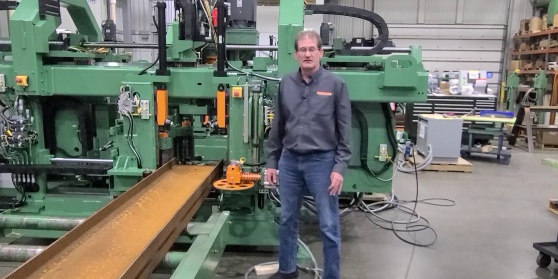
Hello again. I'm Duane Bates, the pre-installation and training department manager at Peddinghaus. In this video, I will be explaining how to create a macro in Raptor.

You start by going to the tools menu at the top and clicking "macros". The Macro window will open for you. On the left-hand side, you see macros I have previously created. You will also see a macros menu. Under that macros menu you haveiImport. You also have the ability to import Raptor macros, which are XML, or Peddimat macros. If you have a previous version of Peddimat that has macros you want to import, you can import those files here. At the top we have "new macro", "new cope" and "edit". New macro is where you create a new macro, which we will do in a couple moments

New cope would be an additional cope for that macro. Once we create a macro on one surface, or at one location on a surface when we want to create another one in the same macro, we would need to hit the "new cope" button. If we want to edit one that's existing, we simply select it and edit. At the bottom we have surface, defining what surface we put the cope on, the reference location and absolute & incremental. Whether we are measuring in Absolute or Incremental values. I'll explain more about that in just a moment. Select "new macro". You'll notice the surface is now highlighted. We can select the surface we want to put our first cope on.

In this case, I'll select web. The reference location I will use is XY. I prefer to do my copes in incremental. Absolute values are locations away from the reference point. This is the value or distance away from the reference point. Incremental is the distance from the previous point, wherever you happen to be on the part. It is how far you moved to go from this location to that location.

Down here we have the area where we will start entering our values to make our moves. We have an X value. That's how far the X movement is, or the X location.  We have a gage value. That's the Y component, or the vertical component. We have a radius X and radius gage. You can either use radius X and radius gage, or you can use a radius value. If you choose to use radius X and radius gage, you do not need to use the radius. Conversely, if you use radius you do not need to use radius X and radius gage. You also have direction. If you are creating an arc, like a semicircle, you would need to tell it whether you are going clockwise or counterclockwise around that radius. The slope is the angle, or degree, of a bevel for a beveled flange or any beveled cut. You put your degree in here. It does need to be proceeded by the "K" which means constant. It's a constant value. It is not seen as a dimension but a degree at that point.

Under "type" we have either external or internal. Those are the two different types of bevels you might put on a flange. An external bevel has the bevel exposed to the external portion of the beam. Internal is exposed to the internal portion of the beam. Angle and angle type will rarely be used in any of the macros you make. They are for doing bevels across a flange when you need to change the torch angle back to zero. You insert the number of degrees you want to change that angle by. The angle type is either forward or reversed. That's the direction you are moving the torch, either a forward or reversed direction. Like I said, you will rarely use these in any of the macros you make.

The cope we will attempt today is a standard block cope. A cut on the web here is a standard cut on the web. I cut across the flange that coincides with it. In this particular cope, it happened to be 3/4" deep 1-7/8" long. We're going to change those when we apply this later on, but that's an instance of what it would be. For the values that we're going to use today, instead of using solid values such as 3/4" and 1-7/8", we are going to use depth and length. That way values can be changed at a later date to make the cope variable, pending upon what the needs are. We're going to start by setting our start point. The point I want to start this cope is actually right here. It's at the beginning edge of the beam. It is a depth distance down from the top. My X value will be 0 because I am on the front edge. My gage value will be depth. That's all I need to do to set the initial position. I click down to the next slide to create my first actual cut.

I'm going to move a distance of length in X and a gage movement of 0. I'm not moving vertically in this cut. It is simply a left to right movement from here to a point right here. I'm also going to put a radius on that corner. My next movement has no X movement at all. It has a gage movement of negative depth. That movement is moving from right here upward back up to the top. It is negative because we are going back towards our reference point. Anytime you move back towards your reference, in this case we are at the top left, it is going to be a negative movement. Our value here is going to be negative depth. That's all we need for the web cut. We simply hit "save". Hit "new cope" so we can create a corresponding top flange cut to go with this.

Select "new cope". Come down here to find a surface we want to do this cope on. Our reference location is XZ'. This is top left once again as we look at the top flange. It's going to start on the edge. I'm going to leave it at incremental, and set my dimensions to start the cope. My first X location is length. My gage location is 0. If you can imagine a flange here, we are length distance in from the end. We are right on the edge at 0. Our movement is going to be straight across the flange, so we're not going to be moving X. We are going to be moving a distance of &W in gage. &W stands for the part width for the width of the flange. As you can see you also have available to you &H - part height, &T - flange thickness, &WT - web thickness, &L - part length, &R1 - radius between the web and flanges, and &R2 - radius at the end of a flange, or the edge of a flange.

We can use this &W value so the cope can be resized based upon the profile it is being applied to. That's all we require for this cope, so we hit "save". You can see we have cope 0 and cope 1. Cope 0 is the web cope and cope 1 is the flange cope.

At this point, I am going to select the word "untitled". It is the current title of our part. Right click and rename it. I am going to rename this "block cope". Close this window, open a part to view it, and go to the tools menu in the part view. It may be here in the top left like mine is, or it might be anywhere along this toolbar. Look for this toolbar, not the one at the top. Select the dropdown and "add macros".

Once here, select the block cope, the cope you want. Enter the values you want for the cope. I'm going to make this 1.5 inches deep, 3 inches long, with a .75 inch radius on the corner. Hit "apply to shape". Verify it has been applied. Close this window and select "Ok" in the lower right viewer. There's our cope in the top left corner of the part. We have the web and flange cuts that correspond with it.

There's one more thing we can do. Go back to macro, and go to "block cope". This area here, on the upper right side, is to add an image to have a descriptor. This way we know exactly what it should look like. You can see on some of the other ones I created. I will go back to "block cope". Right click and select change image. I have an image already ready for this, of course we've been using it. Select it. You can resize the window. It is resizable. There's a descriptor of what we need. We still have the radius here as well. If I went back to that window to add macros and select that cope I will see the image is there.

For any other service related questions please contact peddinghaus support at 1-815-937-3800 and press 2 for technical assistance. Visit our website at www.peddinghaus.com for more how-to videos and additional machine information.

Current Channel: How To
PCDC Encoder Calibration
Watch
How To
DXF Import
DXF Import
Watch
How To
XML 3D Export
XML 3D Export
Watch
How To
Export Peddimat in Raptor
Watch
How To
SDS2 Import
SDS2 Import
Watch
How To
Tekla Import
Tekla Import
Watch
How To
IDSTV+ Import
IDSTV+ Import
Watch
How To
ISDTV+ Export
ISDTV+ Export
Watch
How To
Edit View Menus in Raptor
Watch
How To
File Menu Options in Raptor
Watch
How To
Welds and Weld Filters in Raptor
Watch
How To
Import Peddimat in Raptor
Watch
How To
Import DSTV in Raptor
Watch
How To
Export DSTV in Raptor
Watch
How To
Scribes and Scribe Filters Tabs in Raptor
Watch
How To
Manage and General Filters Tabs in Raptor
Watch
How To
Holes and Popmarks Tabs in Raptor
Watch
How To
The "Advanced Settings" Tab Overview in Raptor
Watch
How To
Copes, Cope Filters and Advanced Tabs in Raptor
Watch
How To
How To Get Remotely Connected To Support - Windows 7
Watch
How To
How To Get Remotely Connected To Support - Windows XP
Watch
How To
What Information Do I Need Before Contacting Support
Watch
How To
How Do I Access Prints and Manuals For My Machine
Watch
How To
Tapping a Profile in Raptor for Operation on Advantage-2
Watch
How To
Countersinking in Raptor for Operation on Advantage-2
Watch
How To
Milling a Profile in Raptor for Operation on Advantage-2
Watch
How To
DG-1100 Breaking in a Saw Blade
Watch
How To
DG-1100 Saw Speeds and Feeds
Watch
How To
Specialty Tool Types in Peddimat
Watch
How To
Peddimat Speeds and Feeds
Watch
How To
Raptor Speeds and Feeds
Watch
How To
 

Start Your Most Profitable Partnership Today!

Request Demo Request Quote Request Visit Request Call

Stay Connected

Peddinghaus
Stronger Than Steel

Headquarters

300 N Washington Ave.
Bradley, IL 60915

T | +1 815 937 3800

E | info@peddinghaus.com

Support (USA & CAN): +1 815 937 3800 Press 2

Contact Us

Machines

  • Laser Cutting
  • Drill Lines
  • Plate Processors
  • Angle Lines
  • Thermal Cutting
  • Robotic Welding
  • Layout Marking
  • Band Saws
  • Material Handling
  • Shot Blasters
  • Ironworkers

Useful Links

  • Software
  • Technology
  • Videos
  • News
  • Magazine
  • Photos
  • Careers
  • Shop

Help

  • Remote Assistance
  • Training Videos

Contact

  • Sales
  • Support
  • Parts

United States © 2025. Peddinghaus Corporation. All Rights Reserved. | Privacy Policy

  • National Safety Council
  • American Institute of Steel Construction
  • American Welding Society
  • British Constructional Steelwork Association
  • Canadian Institute of Steel Construction
  • Fabricators & Manufacturers Association, International
  • Steel for Life