Select Language

  • Menu
  • Machines
    • Machines
    • Back
    • Drill Lines
      • Drill Lines
      • Back
      • PeddiSubX-1120
      • Peddi XDM-630
      • Advantage-2
      • BDL-1250/9D
    • Plate Processors
      • Plate Processors
      • Back
      • HSFDB-C
      • HSFDB-B
      • FPB-1800
    • Angle Lines
      • Angle Lines
      • Back
      • Anglemaster-663
      • Anglemaster-863
      • Anglemaster-643
    • Thermal Cutting
      • Thermal Cutting
      • Back
      • PeddiBot-1250
      • PeddiBot-1250ST
      • PeddiBot-1200
      • ABCM-1250
    • Robotic Welding
      • Robotic Welding
      • Back
      • PeddiAssembler
    • Layout Marking
      • Layout Marking
      • Back
      • PeddiWriter
    • Band Saws
      • Band Saws
      • Back
      • DG-1250
      • DG-1100
      • 1250-510
      • 510-DGA
    • Material Handling
      • Material Handling
      • Back
      • PeddiRotator
    • Shot Blasters
      • Shot Blasters
      • Back
      • PeddiBlast
    • Ironworkers
      • Ironworkers
      • Back
      • PeddiMax
      • PeddiWorker
      • PeddiCat
    • Laser Cutting
    • Used Machinery
  • Software
    • Software
    • Back
    • Raptor
  • Technology
  • About
    • About
    • Back
    • About Us
    • Clients
    • Partners
    • Industries We Serve
    • Careers
  • Media
    • Media
    • Back
    • Videos
    • News
    • Magazine
    • Photos
    • eNews Signup
  • Shop
    • Shop
    • Back
    • Apparel
    • Band Saw Blades
    • Carbide Tooling
    • Coolants
    • Drill Bits
    • Laser Consumables
    • Plasma Consumables
    • Punches
    • Dies
    • Tool Holders & Accessories
  • Help
    • Help
    • Back
    • Remote Assistance
    • Training Videos
  • Contact
    • Contact
    • Back
    • Sales
    • Support
    • Parts
    +1 815 937 3800 info@peddinghaus.com
  • Machines
    • Drill Lines
    • Plate Processors
    • Angle Lines
    • Thermal Cutting
    • Robotic Welding
    • Layout Marking
    • Band Saws
    • Material Handling
    • Shot Blasters
    • Ironworkers
    • Laser Cutting
    • Used Machinery
    close
     

    PeddiSubX-1120

    Carbide 3 Spindle Drill

    Peddi XDM-630

    Carbide 3 Spindle Drill

    Advantage-2

    Carbide 3 Spindle Drill

    BDL-1250/9D

    9 Spindle Drill

    Powerful Drill Lines To Get The Job Done Right

    We Build The Strongest Machines

    View All Drill Lines Sales Expert
     

    HSFDB-C

    Maximum Plate Thickness: 4"

    HSFDB-B

    Maximum Plate Thickness: 3"

    FPB-1800

    Maximum Plate Thickness: 1-1/4"

    Powerful Plate Processors To Get The Job Done Right

    We Build The Strongest Machines

    View All Plate Processors Sales Expert
     

    Anglemaster-663

    Angle Capacity: 6.3" x 6.3" x 3/4"

    Anglemaster-863

    Angle Capacity: 8" x 8" x 1"

    Anglemaster-643

    Angle Capacity: 6" x 6" x 5/8"

    Powerful Angle Lines To Get The Job Done Right

    We Build The Strongest Machines

    View All Angle Lines Sales Expert
     

    PeddiBot-1250

    Type of Thermal Cutting: Plasma and Oxy-Fuel

    PeddiBot-1250ST

    Type of Thermal Cutting: Plasma

    PeddiBot-1200

    Type of Thermal Cutting: Plasma

    ABCM-1250

    Type of Thermal Cutting: Oxy-Fuel

    Powerful Thermal Cutting To Get The Job Done Right

    We Build The Strongest Machines

    View All Thermal Cutting Sales Expert
     

    PeddiAssembler

    Profile Capacity: 16" x 30" x 60'

    Powerful Robotic Welding To Get The Job Done Right

    We Build The Strongest Machines

    Sales Expert
     

    PeddiWriter

    Plasma ArcWriting

    Powerful Layout Marking To Get The Job Done Right

    We Build The Strongest Machines

    Sales Expert
     

    DG-1250

    Miter Cut Sawing

    DG-1100

    Miter Cut Sawing

    1250-510

    Straight Cut Band Saw

    510-DGA

    Miter Cut Sawing

    Powerful Band Saws To Get The Job Done Right

    We Build The Strongest Machines

    View All Band Saws Sales Expert
     

    PeddiRotator

    360° Rotation

    Powerful Material Handling To Get The Job Done Right

    We Build The Strongest Machines

    Sales Expert
     

    PeddiBlast

    Roller Conveyor Blast Machine

    Powerful Shot Blasters To Get The Job Done Right

    We Build The Strongest Machines

    Sales Expert
     

    PeddiMax

    Tonnage: 140 Tons

    PeddiWorker

    Tonnage: 100 Tons

    PeddiCat

    Tonnage: 55 Tons

    Powerful Ironworkers To Get The Job Done Right

    We Build The Strongest Machines

    View All Ironworkers Sales Expert
  • Software
    • Raptor
  • Technology
  • About
    • About Us
    • Clients
    • Partners
    • Industries We Serve
    • Careers
  • Media
    • Videos
    • News
    • Magazine
    • Photos
    • eNews Signup
  • Shop
    • Apparel
    • Band Saw Blades
    • Carbide Tooling
    • Coolants
    • Drill Bits
    • Laser Consumables
    • Plasma Consumables
    • Punches
    • Dies
    • Tool Holders & Accessories
  • Help
    • Remote Assistance
    • Training Videos
Contact
  • Sales
  • Support
  • Parts

Select Language

Search
Filter Videos By
  • Machines
    • Drill Lines
    • Plate Processors
    • Angle Lines
    • Thermal Cutting
    • Robotic Welding
    • Layout Marking
    • Band Saws
    • Material Handling
    • Shot Blasters
  • Software
  • Customers
  • Partners
  • Events
  • News
  • How To
All Videos
Search Video Gallery
Watching:The "Advanced Settings" Tab Overview in Raptor
 
Channel: How To

The "Advanced Settings" Tab Overview in Raptor

Published 05/07/2020

Learn all about the "Advanced Settings" tab overview in Raptor.

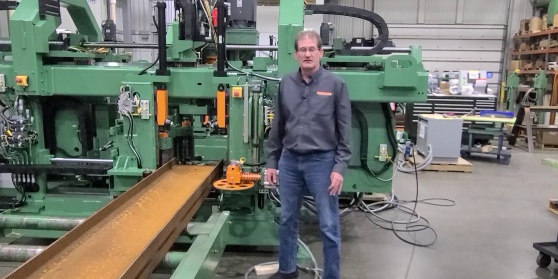
Hi. I'm Duane Bates, the pre-installation and training department manager at Peddinghaus.

In this video, I will be taking you through the advanced settings in Raptor.

To get to those settings, you simply go the Tools menu, and then Settings, and then Advanced. The Advanced Settings window opens. And you'll notice that we have multiple tabs here.

On the first tab, the Viewer tab, we have Holes Rendering. If you select Paint Holes, it will draw the outline of the hole on the surface. If you choose Cut Holes Legacy or Cut Holes, the material in the hole will actually be removed in the graphic. On the machine control, you should always choose Paint Holes.

Below this, we have Selection Highlighting. With this selected, it allows you to highlight and select features on the part in the part viewer.

Here in the top right of the tab, we have Text Scribes. We have a selection of three different fonts, either Raptor, Raptor Straight Lines, or Peddimat. Space between words and space between letters simply is saying that spaces take up one character space, and letters themselves take up one character space. If you would like your zeros to have a slash through them, you can check this box here. Down here in the middle, we have reference holes from center, and you can select which surfaces you would like to have reference from center. Please note that this is on all profiles not just beams, or not just channels, or anything like that but on all profiles. So please be aware of that.

Next, we have pop marks to holes diameter. Within Raptor we have the ability to take a hole and make it a pop mark. And then we have the ability to also take that pop mark and turn it back into a hole. In that case, we need to define the diameter where you're making that hole in some location. And that's what we are doing here. So in this case, if I changed the pop mark to a hole, it would end up being a half-inch diameter hole.

The initial view when I open up the part viewer can be 3D or 2D web, top flange, bottom flange, or underside. We have the ability to make the part transparent. Here we're setting the transparency percentage. The higher the number, the more transparent it is. The rendering precision is 1 to the negative fifth power. That's 0.00001. Raptor is trying to be extremely precise with the files and information that it receives. If for some reason you're experiencing problems importing files, you may need to loosen this number up a little bit maybe to negative 3, which would be 0.001. And that might assist with the importing process. Generally, you can leave it at this number and it will be just fine.

Reverse coordinates simply allows us to dimension from the right end instead of the left end. The coordinate system will be located on the right end instead of the left. And we can do that just in the viewer, just in the preview, or all. This is generally used in Europe where they sometimes will dimension from the right to the left.

Cope Design Escape Key is for manual copes. Within Raptor we have the ability to use the mouse to click and draw copes. And if we want the cursor to let go of the cope line or the cope line to let go of the cursor, we can either hold down the Shift or Alt key as we have selected here. And that will allow the mouse to move and the cope line will not follow it.

The next tab is the Viewer 2 tab. Here we have copes as lines. With this selected, all copes are shown just as lines on the surfaces. If it is unchecked, the material will actually be removed in the part viewer. We can also select to have line vectors above the surface or below the surface. My typical selections are copes as lines and below surface only.

Next, we have a Messages tab. When you check these boxes, it turns off the messages. So if I selected copes, it would turn off the copes messages. My recommendation there is that you would leave these unselected until you know what those messages are, and then check them if you feel that you don't need to see that message. Until that time, though, leave them unchecked.

Next, we have the Machines tab. Here we have a mode called Unsafe Mode. On some machines, what this will allow is this will allow the safety distances to be overridden so that holes can be drilled or punched in areas that would normally be considered to be a safety distance. Run corrections while generating CNC. Raptor has a group of settings called corrections that will automatically modify features on the part for you. If you don't want to do it manually, you can simply select this, and it will do it automatically when you generate the CNC. Additionally, we also have Allow Edge Holes. This is only for punching machines like Anglemasters. And it's just if you want to punch a partial hole on the edge of the material.

Next, we have the Import tab. Here we have Save Parts and Multiparts on Import. There is no need to save parts into your database other than to make multiparts. So wherever you are making your multiparts at, it would be advisable to have this selected so that when you import them they're automatically saved into the database so that you can go ahead and make the multiparts immediately. And if you've already imported the parts previously, you can choose to overwrite them so that you only have one copy of that part.

Next, we have the Export tab. Here you can choose to overwrite XML 3D and XML 3DM parts. These are Raptor single parts and Raptor multiparts. So as you're exporting them into a folder, if you already exported them to that location, you can choose to override them or overwrite them so that you'll only have one copy. You can also choose to display any error messages that you're going to see in one message if you want. Next, you get to choose what information is in that file name. You can choose between Assembly, Project, Lot Number, Lot Name, and Part Name. And you can also choose all five of those if you'd like simply by adding additional information below here. Since this is going to become a Windows file, you do need to put a dash between these two bits of information or something between these two bits of information so you can differentiate from the project number and the part name.

Next, whenever we are exporting an XML 3DM Raptor Multipart, do we also want to export the single parts that are in that multipart? If so, we can simply check this box. And then we can either choose to embed the single parts in the same directory as the multiparts by checking this box. Or we can choose to put them in a separate directory by browsing and finding a location here.

Next, we have the Tolerances tab. And the first thing we have here is the Absolute Rounding Number. This is the precision to which Raptor is trying to display the features on the part. 6,000th is typical. It is a resolution number. It's not a dimensional number. So it will not change when you go between inch or metric. Multipart Profile Tolerance is a tolerance that we give it so that if parts come from different sources like DSTV, Tekla, Raptor, Peddimat. Doesn't matter where the part originated. If the dimensions of the profile are slightly different to within this tolerance, Raptor will allow you to make multiparts out of all those parts.

The last one here is XDM Absolute Rounding Number, and this is the same type of thing like the rounding number here. But it's for the XDM-630 drill line. So that's for a specific machine. And if we use the arrows here in the top right, we'll see that we have a few more tabs.

We have a Center Line tab. Here we can select different surfaces to apply center line to either an X or in gage. You can apply these center lines to the part in the viewer by selecting Control and K at the same time. These center lines will be applied to the part as construction lines which will be graphic representations of the center lines that will never actually be physically applied to the part on the machine. You can leave them on the part if you'd like. They will not ever affect the CNC.

The Save tab. Here we can tell it to save parts and multiparts on creation. So when we're creating parts in Raptor if we want to save them automatically, we can do that. Raptor also has Auto Save Settings. It is automatically saving your Raptor settings every 30 minutes to a general profile. If you make a change to Raptor and then shut it down, the next time you start Raptor back up it will ask you if you want the new settings or the old settings. And if you don't remember making the change, you may want to choose the earlier settings so that nothing is affected.

And at the bottom, we have Archived Parts. So we have the ability to archive parts either by project or by source. And once we check one of those, we have a dropdown here either of the different sources that the parks can come from or the different projects that we happen to have in our database. We would simply choose this and then choose the project or choose the source that we want and select Archive, and it will archive those parts for us. At the same time, we can force it to remove those parts from the database as well. And we can choose to remove the empty project as well.

Next, we have selection. The first two are for when we are using the batching utility that is found in the Inventory section of Raptor. And then the last one is for making multiparts. What these are for is if these are checked when we are selecting in this case parts or stocks or parts here as well, they will stay selected. When we check them with the cursor, they stay selected instead of needing to hold down the Control key on the keyboard.

And the last tab is Integration. This is specifically for integrating with other softwares and for those softwares to be able to make connections to the three databases that are in Raptor either the Parts database, the Shape database, or the Operations database, and, additionally, where the DSTV files will be held.

That is all for the advanced settings. Once you have set them you just simply say OK and those settings are held.

For any other service-related questions, please contact Peddinghaus Support at 1-815-937-3800 and press 2 for technical assistance, or visit our website at www.peddinghaus.com for more how to videos and additional machine information.

Current Channel: How To

PCDC Encoder Calibration
Watch
How To
DXF Import
DXF Import
Watch
How To
XML 3D Export
XML 3D Export
Watch
How To
Export Peddimat in Raptor
Watch
How To
SDS2 Import
SDS2 Import
Watch
How To
Tekla Import
Tekla Import
Watch
How To
IDSTV+ Import
IDSTV+ Import
Watch
How To
ISDTV+ Export
ISDTV+ Export
Watch
How To
Edit View Menus in Raptor
Watch
How To
File Menu Options in Raptor
Watch
How To
Welds and Weld Filters in Raptor
Watch
How To
Import Peddimat in Raptor
Watch
How To
Import DSTV in Raptor
Watch
How To
Creating Macros in Raptor
Watch
How To
Export DSTV in Raptor
Watch
How To
Scribes and Scribe Filters Tabs in Raptor
Watch
How To
Manage and General Filters Tabs in Raptor
Watch
How To
Holes and Popmarks Tabs in Raptor
Watch
How To
Copes, Cope Filters and Advanced Tabs in Raptor
Watch
How To
How To Get Remotely Connected To Support - Windows 7
Watch
How To
How To Get Remotely Connected To Support - Windows XP
Watch
How To
What Information Do I Need Before Contacting Support
Watch
How To
How Do I Access Prints and Manuals For My Machine
Watch
How To
Tapping a Profile in Raptor for Operation on Advantage-2
Watch
How To
Countersinking in Raptor for Operation on Advantage-2
Watch
How To
Milling a Profile in Raptor for Operation on Advantage-2
Watch
How To
DG-1100 Breaking in a Saw Blade
Watch
How To
DG-1100 Saw Speeds and Feeds
Watch
How To
Specialty Tool Types in Peddimat
Watch
How To
Peddimat Speeds and Feeds
Watch
How To
Raptor Speeds and Feeds
Watch
How To
 

Start Your Most Profitable Partnership Today!

Request Demo Request Quote Request Visit Request Call

Stay Connected

Peddinghaus
Stronger Than Steel

Headquarters

300 N Washington Ave.
Bradley, IL 60915

T | +1 815 937 3800

E | info@peddinghaus.com

Support (USA & CAN): +1 815 937 3800 Press 2

Contact Us

Machines

  • Laser Cutting
  • Drill Lines
  • Plate Processors
  • Angle Lines
  • Thermal Cutting
  • Robotic Welding
  • Layout Marking
  • Band Saws
  • Material Handling
  • Shot Blasters
  • Ironworkers

Useful Links

  • Software
  • Technology
  • Videos
  • News
  • Magazine
  • Photos
  • Careers
  • Shop

Help

  • Remote Assistance
  • Training Videos

Contact

  • Sales
  • Support
  • Parts

United States © 2025. Peddinghaus Corporation. All Rights Reserved. | Privacy Policy

  • National Safety Council
  • American Institute of Steel Construction
  • American Welding Society
  • British Constructional Steelwork Association
  • Canadian Institute of Steel Construction
  • Fabricators & Manufacturers Association, International
  • Steel for Life